
Fly Quiet could make the 2024 flight paths the standard
Sonoma County’s approved Fly Quiet program would grade airlines on how they operate. Better grades would not show whether the disputed flight paths are appropriate — but they could shift attention from that question and make those paths the accepted starting point.
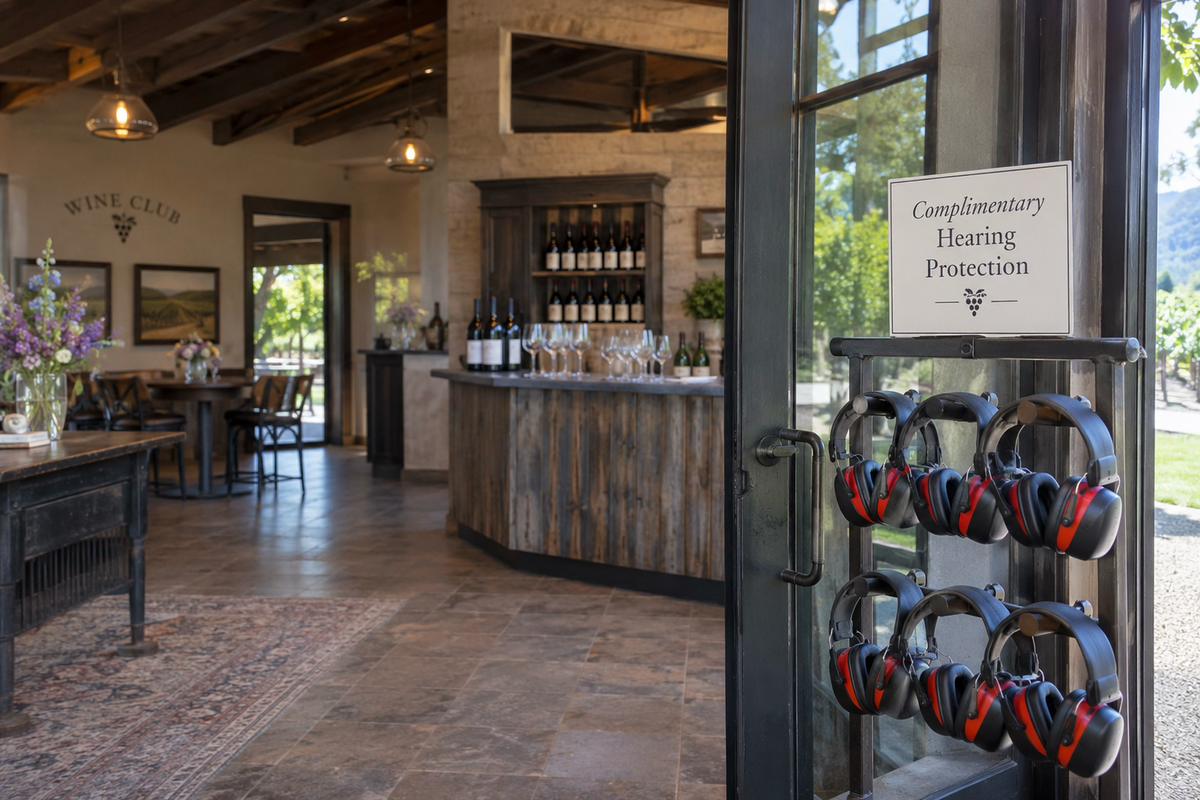
On November 3, the Board of Supervisors voted 3–2 to approve a voluntary Fly Quiet program for Sonoma County Airport as part of its response to complaints about aircraft noise. In August, the Aviation Commission had recommended a reduced program built around quiet-hours guidance, airline scorecards, a community roundtable, and expanded flight tracking and noise estimates. The agreement approved covers all elements of the program.
But at Charles M. Schulz–Sonoma County Airport (STS), the central dispute is not simply about how loudly aircraft operate. It is about where they fly.
In January 2024, the introduction of the RREHD ONE departure procedure brought regular airline overflights to parts of west Sonoma County that had previously seen far fewer overflights. Residents are questioning the routing change itself, not merely asking airlines to operate more quietly within it.
Fly Quiet risks turning that disputed change into the standard by which the County judges improvement.
Fly Quiet scores do not establish reductions in community noise
Jackson Hole Airport is one of the peer programs from which the STS proposal reportedly draws inspiration. Its results illustrate the limits of what airline scores can tell Sonoma County.
Jackson Hole scores each operator on a 100-point scale on its operating behavior, including adherence to procedures. Those scores do not establish whether surrounding communities have become quieter.
Jackson Hole reported substantially better scores for private aviation in 2025, while commercial airline scores changed little. That contrast matters at STS, where commercial airline departures are central to the West County dispute. The detailed comparison appears in the Notes.
But improved operating scores cannot establish whether moving flights onto the routes airlines now fly improved or worsened conditions for affected communities.
How the disputed route could become the accepted standard
None of the approved Fly Quiet measures, as described in the records examined, requires comparison with conditions before the 2024 routing change.
That leaves the question examined in A disputed change cannot be its own baseline unanswered: what did changing those flight paths do to affected communities?
An earlier version of the scorecard included track adherence. The records examined do not establish whether the reduced proposal retains that component or how it would be applied at STS. If compliance is judged against RREHD ONE, airlines could receive credit for following the very procedure residents are challenging.
Pilots can request different routing, but a voluntary airport program cannot override their air traffic control clearance.
The broader risk remains even if Fly Quiet produces worthwhile improvements. Published quarterly scorecards, as described in the July proposal, would give officials, airlines, and the public a recurring measure of progress.
Discussion could increasingly center on improving those scores while the consequences of the routing change remain unexamined. The disputed routes could become the accepted starting point without anyone establishing whether they were an improvement. That shift would not require anyone to act in bad faith.
Progress means measuring what the routing change did
The County is also pursuing changes to departure procedures, and officials have asked the FAA for greater use of CHARLIE EIGHT. Fly Quiet is one part of its response.
The meaningful test is what those efforts change for affected communities. That requires comparing conditions before and after the 2024 routing change, accounting separately for the growth in airline traffic, and assessing effects across communities.
Such a comparison would not automatically establish that the former route should be restored. It would provide evidence against which to judge the alternatives.
The test is not whether airlines become better at following the existing flight paths. It is whether anyone has measured what changing those paths did to the communities affected, and addressed what the measurement shows.
Notes
The STS Fly Quiet program
The signed minutes of the April 16, 2026, Aviation Commission meeting describe Cignus’s Fly Quiet proposal as primarily addressing aircraft operating under visual flight rules (VFR), with application to instrument flight rules (IFR) traffic where possible.
A July 2026 Press Democrat report described the proposed airline scorecard, scored quarterly, as weighting:
| Criterion | Weight |
|---|---|
| Minimizing nighttime operations | 30% |
| Good-neighbor departure practices | 25% |
| Track adherence | 20% |
| Continuous descent operations | 20% |
| Use of noise-preferred aircraft | 5% |
The Commission’s August 20 recommendation retained airline scorecards within a reduced four-component program, but the records examined do not establish whether those percentages remained unchanged or how track adherence would be defined. The November 3 staff report says scoring would account for runway use, weather, aircraft capability, and FAA instructions, but gives no weights.
Under 14 CFR §91.123, pilots must comply with their air traffic control clearances and instructions, subject to specified exceptions. A voluntary airport program therefore cannot itself authorize pilots to disregard their clearance.
Jackson Hole’s Fly Quiet results
Scores are built on a 100-point scale, with bonus points allowing totals above 100. A score of 90 or above is the top tier. The 2024 scores and operation counts come from Jackson Hole Airport’s year-end report. The 2025 scores are reported by the Jackson Hole News & Guide from an airport board presentation.
| Carrier | 2024 score | 2024 operations | 2025 score | Change |
|---|---|---|---|---|
| Alaska | 89.5 | 164 | Not reported | — |
| American | 80.1 | 2,084 | 75.8 | −4.3 |
| SkyWest | 80.1 | 1,785 | 82.6 | +2.5 |
| Delta | 79.5 | 2,575 | 81.7 | +2.2 |
| United | 76.0 | 4,475 | 75.9 | −0.1 |
No airline with a reported score reached the highest tier in either year. The operations-weighted average of the four carriers with reported scores in both years remained approximately 78, using 2024 operation counts as the weights.
General aviation produced a different pattern. In 2024, 54% of general-aviation operations received the highest rating. In 2025, 78% of private operators reportedly scored above 90, compared with roughly half the preceding year. These percentages use the populations described in the respective reports and should not be treated as an exact like-for-like measure without checking the underlying definitions. Airport representatives have identified newer aircraft, education, and outreach as possible contributors to the private-aviation improvement.
Jackson Hole’s second-quarter 2024 report recorded a 48% reduction in operations during expanded voluntary curfew hours compared with the same quarter of 2023, while cautioning that seasonal conditions, weather, operational events, and market demand could influence the result.
At Jackson Hole, the 2024 airline scores for procedure adherence were tightly clustered between 24.7 and 24.9 out of 25. This illustrates how high procedural-compliance scores can coexist with considerable variation in other measures of operator performance.
The 2024 annual noise report found compliance with airport noise requirements, but the material examined does not establish a causal reduction in community noise attributable to Fly Quiet.
The FAA’s 2024 baseline
As detailed in A disputed change cannot be its own baseline, the FAA reported holding no records of a design-stage analysis comparing the RREHD ONE departure procedure with CHARLIE EIGHT.
A May 2025 FAA letter to Supervisor Hopkins reports a later comparison of flight tracks and average altitudes over Occidental and Sebastopol, using samples of 60 random days before and after the change. It is not an assessment of community noise exposure.
The environmental pre-screening form recorded zero operations in its aircraft categories and identified no noise-sensitive areas. The released record contained no comparison of community noise exposure or ambient conditions between the two routing arrangements.
The absence of such records does not prove that no other analysis occurred, that the previous procedure was necessarily preferable, or that restoration would be operationally appropriate today. It means the available record does not establish the relative community-noise effects of the two arrangements.
Efforts to restore CHARLIE EIGHT
The April 16, 2026, Aviation Commission minutes list temporary restoration of CHARLIE EIGHT as Cignus’s first recommended option, pending approval of a new departure procedure. Cignus’s presentation estimated approximately four to six months for FAA approval or consideration.
County correspondence shows that officials pursued greater use of the procedure: the airport manager’s November 4, 2025 memo to Supervisors Hopkins and Gore proposing a request to the FAA, the supervisors’ April 22, 2026 letter to the FAA, and the FAA’s May 15 reply, which stated that CHARLIE EIGHT remained available at controllers’ discretion.
Traffic growth and community exposure
FAA records show that STS air-carrier operations increased from 3,734 in 2015 to 10,112 in 2025, while other types of airport activity followed different trends. See STS handles far less traffic than it did, but far more of one kind.
More flights can offset the acoustic benefits of quieter aircraft. A reduction of approximately 3 dB in the sound exposure of an individual aircraft event halves its acoustic energy. In energy-averaged measures such as CNEL, doubling the number of otherwise comparable events would approximately cancel that benefit.
That arithmetic does not mean the two circumstances are experienced identically. A greater number of quieter events can produce more individual interruptions despite similar cumulative exposure.
For ambient conditions, individual aircraft events, and sleep disturbance, see The same aircraft, a different impact.
Updated 2026-11-07 to reflect results of vote by Board of Supervisors.
Sources
Sonoma Air Record
- A disputed change cannot be its own baseline
- The same aircraft, a different impact
- STS handles far less traffic than it did, but far more of one kind
Sonoma County Board of Supervisors
STS Aviation Commission
Airport program reports
- Jackson Hole Airport, 2024 Fly Quiet year-end results
- Jackson Hole Airport, 2024 second-quarter Fly Quiet report
- Jackson Hole Airport, 2024 Annual Noise Report
Press coverage
- Complaints drive $360K Sonoma County airport noise plan
- Sonoma County airport tackles growth pains as new record reached
- Private planes were quieter, commercial planes louder in 2025, Jackson Hole Airport says. The report describes commercial aircraft as louder than large private aircraft and responsible for about 60% of noise; it gives no year-over-year noise comparison for airlines.
- Aviation booms at Jackson Hole Airport as private pilots fly “quieter”
Colophon: Researched and drafted in collaboration with Claude (Anthropic) and ChatGPT (OpenAI).